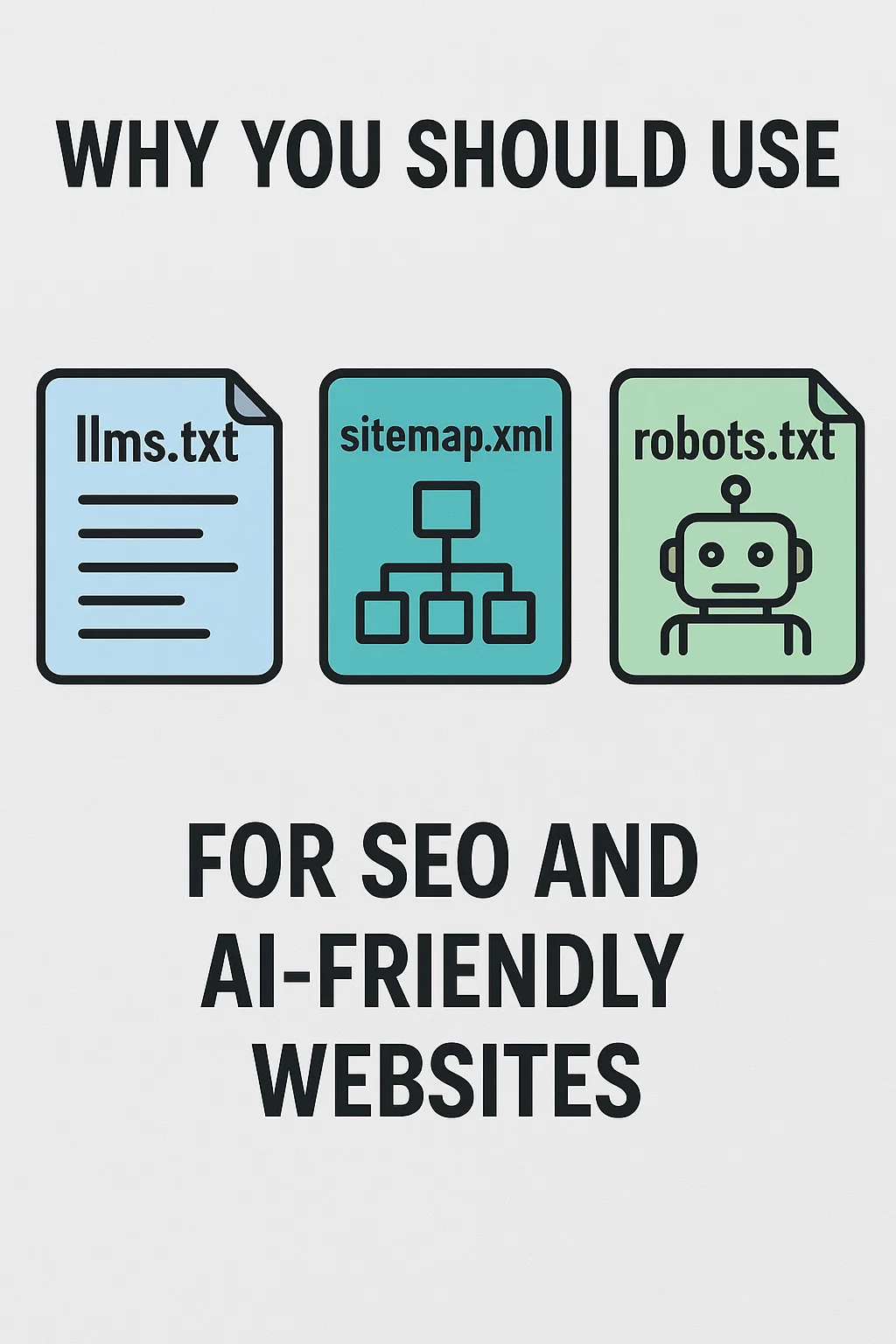
Why You Should Use llms.txt, sitemap.xml, and robots.txt
SEO and AI-Friendly Websites
 ValentaizarHitsukaya
1. Introduction
In today’s digital world, a website is much more than just a collection of pages — it’s an ecosystem that needs to be easily discovered, accessed, and understood by search engines and artificial intelligence (AI). To facilitate this process, there are a few essential files that help both SEO and AI “understand” your site: robots.txt, sitemap.xml, and, more recently, llms.txt.
2. What is robots.txt and Why Does It Matter?
The robots.txt file is one of the oldest and most well-known SEO tools. It tells search engine bots (like Google, Bing, etc.) which pages or directories they are allowed or disallowed to access and index.
Why is it important?
It allows you to control access to sensitive or unimportant content.
It helps optimize crawling and conserve bot resources.Simple example:
User-Agent: *
Disallow: /admin/
3. What is sitemap.xml and Why Does It Matter?
The sitemap.xml is a map of your website that helps search engines quickly find and index all your important pages.
Why is it important?
Especially for large or complex sites, a sitemap ensures all pages are visible to search engines.
It can include the last modification date, update frequency, and page priority.Example:
Including a sitemap link inrobots.txt:Sitemap: https://example.com/sitemap.xml
4. What is llms.txt and Why Does It Matter?
The llms.txt file is a relatively recent addition designed specifically for AI and Large Language Models (LLMs). It allows website owners to regulate how and if AI models can access and use their content for training and response generation.
Why is it important?
As AI becomes more prevalent, this file is becoming a key tool for transparency and content protection.Simple example:
User-Agent: *
Allow: /
5. Why Use All Three Together?
Complete control over how your site is accessed, indexed, and used.
SEO optimization: search engines can find you more easily and display correct results.
AI friendliness: new language models can legally and ethically access your content, increasing your site’s visibility and potential.
Flexibility: restrict certain areas or content while remaining open elsewhere.
6. How to Implement These Files Quickly?
Place
robots.txt,sitemap.xml, andllms.txtin your website’s public directory (e.g., thepublic/folder in Laravel).Ensure each file contains correct and updated content.
Monitor access and adjust as needed over time.
7. Conclusion
In the modern digital era, using robots.txt, sitemap.xml, and llms.txt correctly is not just an option, but a necessity. These files not only help your site be better indexed and visible, but they also prepare it for the future of AI-driven web.